LLM Summaries of Lessons
Following up on yesterday’s post
about using LLMs to generate and check concepts maps for lessons,
I gave DeepSeek the SQL lessons
and the textual descriptions of the corresponding concept maps,
and prompted it to
(a) fix any important omissions or inconsistencies in the latter
and (b) write .dot files for graphviz
to generate a new set of concept maps.
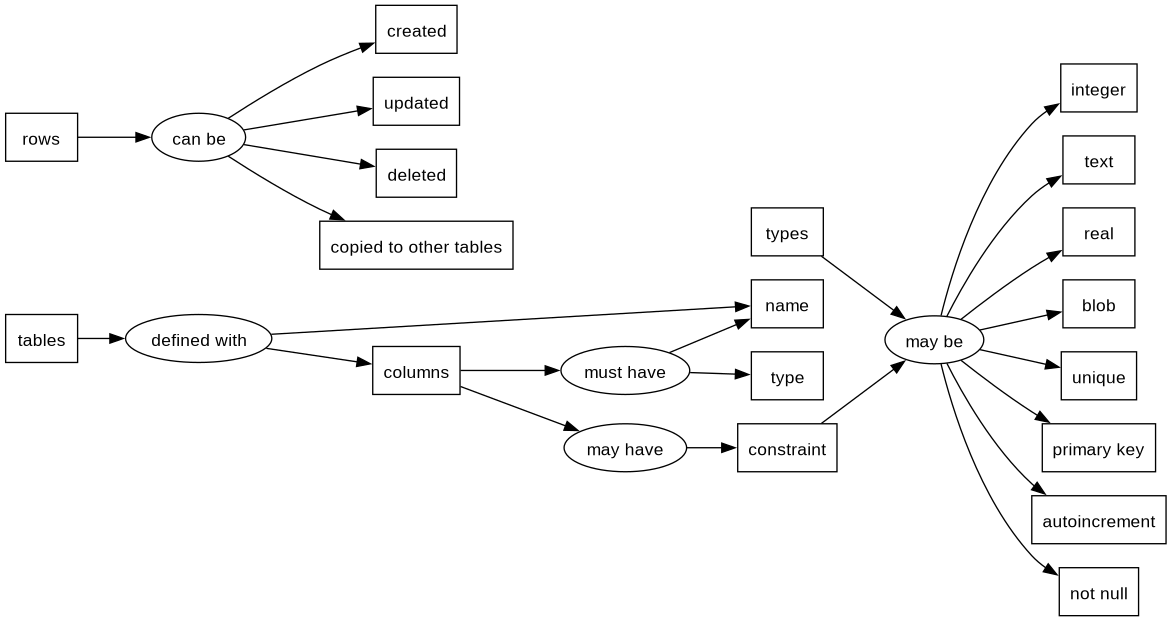
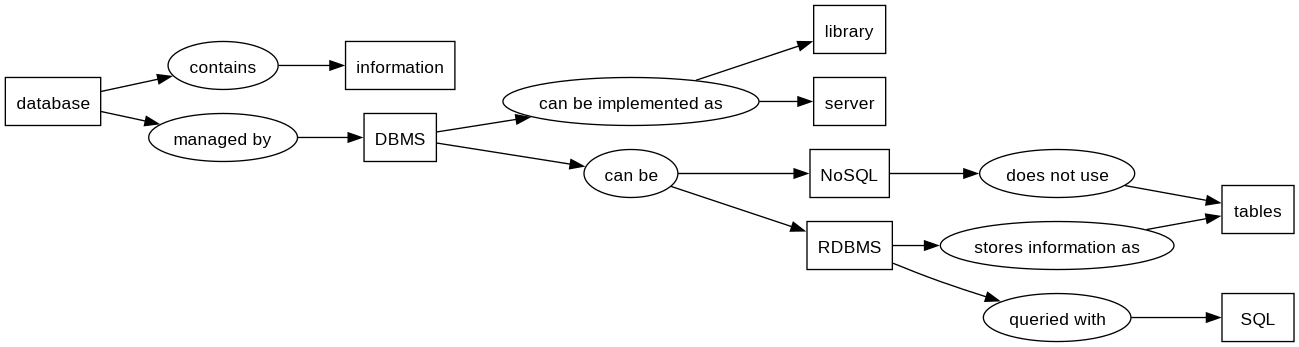
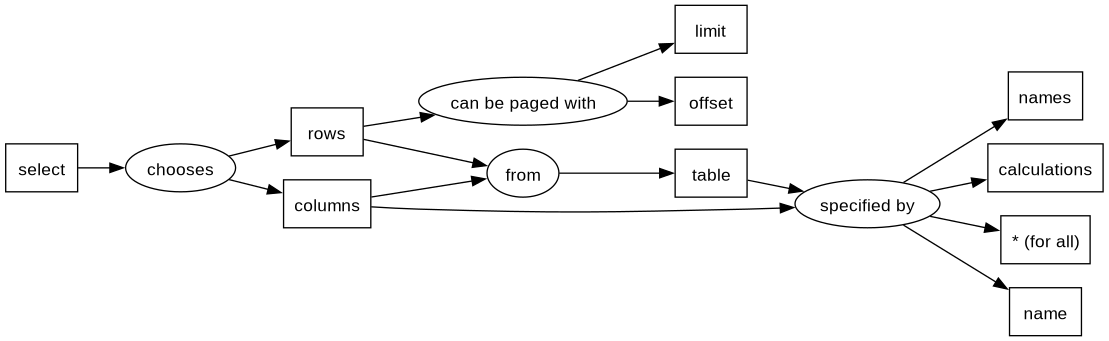
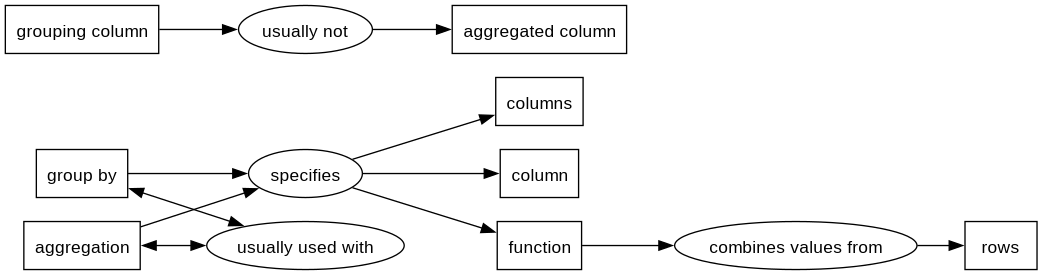
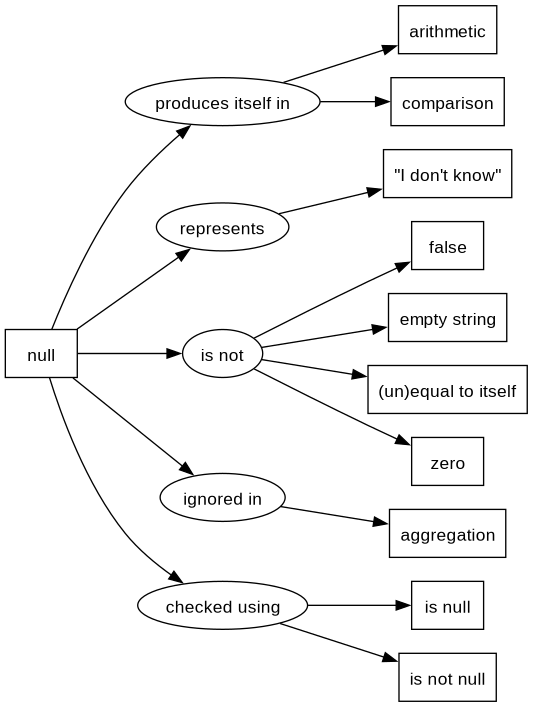
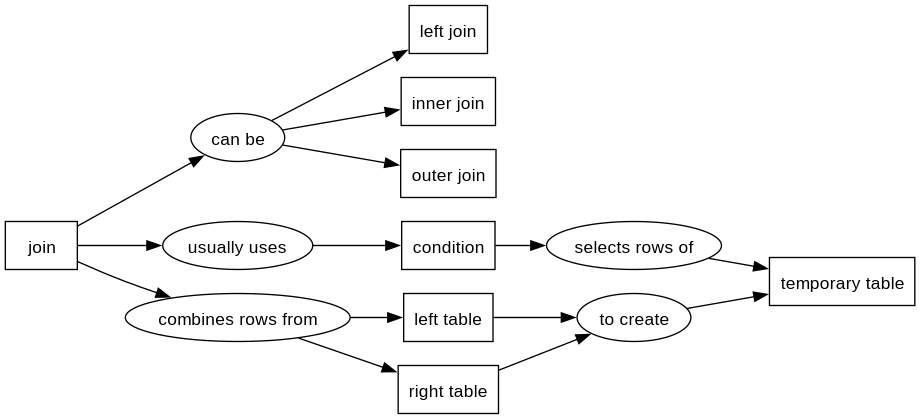
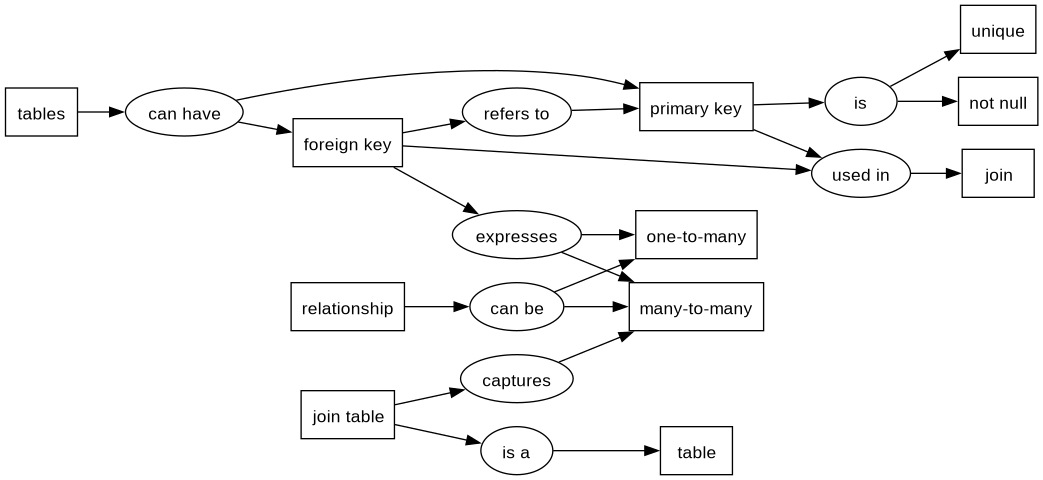
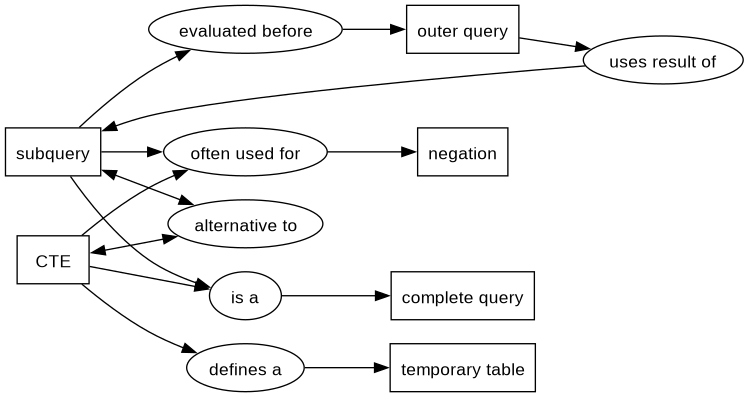
The results (shown below) aren’t terrible,
but they’re also not usable.
Setting aside the number of crossed lines (which aren’t the LLM’s fault),
some key relationships are garbled or missing entirely.
And despite explicit prompting,
the LLM conflates multiple uses of the same relationship:
A--X->B and C--X->D becomes {A,C}--X->{C,D},
which just ain’t so.
I’m interested in this line of thought because I want to be able to interact with the LLM at a higher level than punchcards (which is what all text formats are, with or without ASCII arrows or Markdown conventions). I use concept maps because I can get an overview of a lesson (or anything else) much more quickly from a diagram than I can from point-form text. I also think that I’m more likely to review a diagram than I am to review an equivalent textual expression of the same information. However, if the diagrams that the LLM produces have gaps or are misleading, the fact that those mistakes are happening at a higher level also means that they’re going to have more impact.
Later: someone has pointed out that using an LLM to generate a diagram may be a category error. An LLM is a large language model; it can only generate meaningful diagrams insofar as what’s meaningful in those diagrams can be captured accurately in text. I don’t know enough to know if this is a valid argument or not. If you’re working in this area, or can point me at evidence-backed results (not vendor hype or “it seems to me” claims), please reach out.
Introduction

Basic Selection

Filtering


Grouping and Aggregation

Nulls

Joins

Keys

Subqueries

Modifying Data